

I was filling out a signup form last week when a small detail stopped me cold.
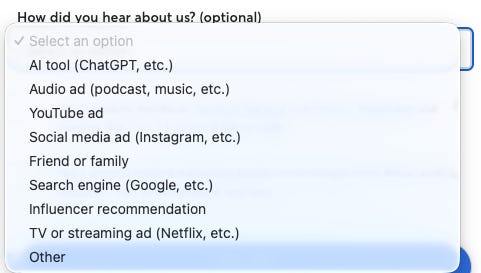
The “How did you hear about us?” dropdown — arguably the most boring field in all of marketing — had a new option sitting at the very top of the list:
“AI tool (ChatGPT, etc.)”
Above YouTube. Above social media. Above Google.
Form fields are lagging indicators. Nobody adds a dropdown option for a channel that might matter someday. By the time something earns a permanent slot in your attribution survey, the behaviour behind it is already mainstream. Which means this unglamorous little checkbox is telling us something important: LLMs have quietly become a customer acquisition channel.

The ultimate dark traffic
“How did you hear about us?” exists because analytics can’t see everything. Word of mouth, podcasts, and recommendations have always been blind spots.
Historically, LLM referrals were that problem on steroids. Someone asks ChatGPT for “the best CRM for a 10-person agency,” gets a recommendation in a private thread, types your URL into a browser, and lands on your homepage. Your dashboard says: Direct. No referrer, no UTM, no click path. The most influential touchpoint in that buyer’s journey is completely invisible to you.
Until recently, this was almost entirely untrackable. Then, on May 7th this year, ChatGPT started surfacing clickable brand links directly inside its answers and the dam broke.
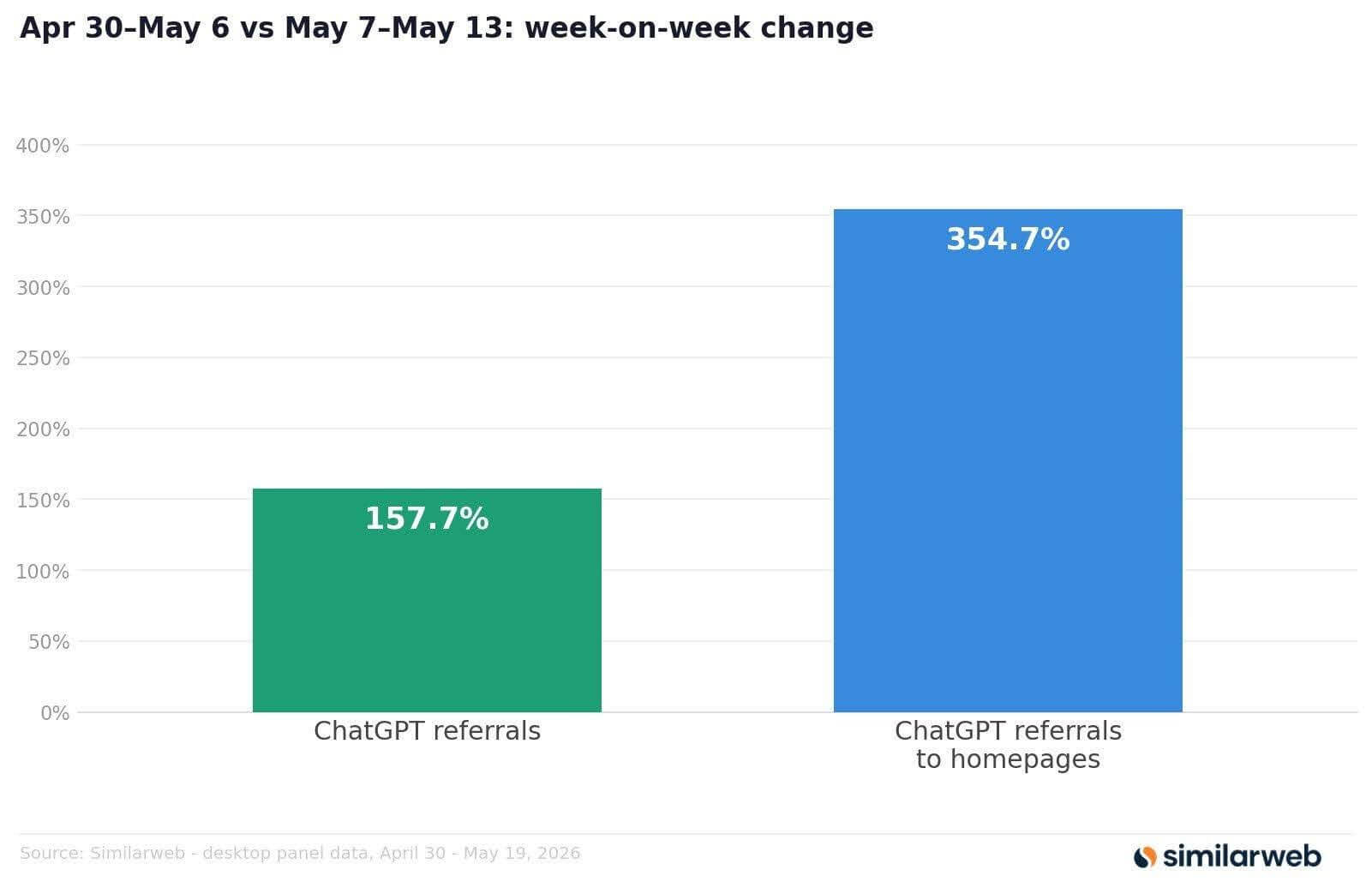
Similarweb measured a 157% week-over-week jump in ChatGPT referral traffic across tracked sites, with homepage referrals up more than 350%.
Roughly 60% of those visits now land on brand homepages, not deep content pages.
Small volume, outsized value
Let’s be honest about scale: for most websites, AI referrals are still a low single-digit percentage of traffic. If you’re judging this channel by volume, you’ll dismiss it.
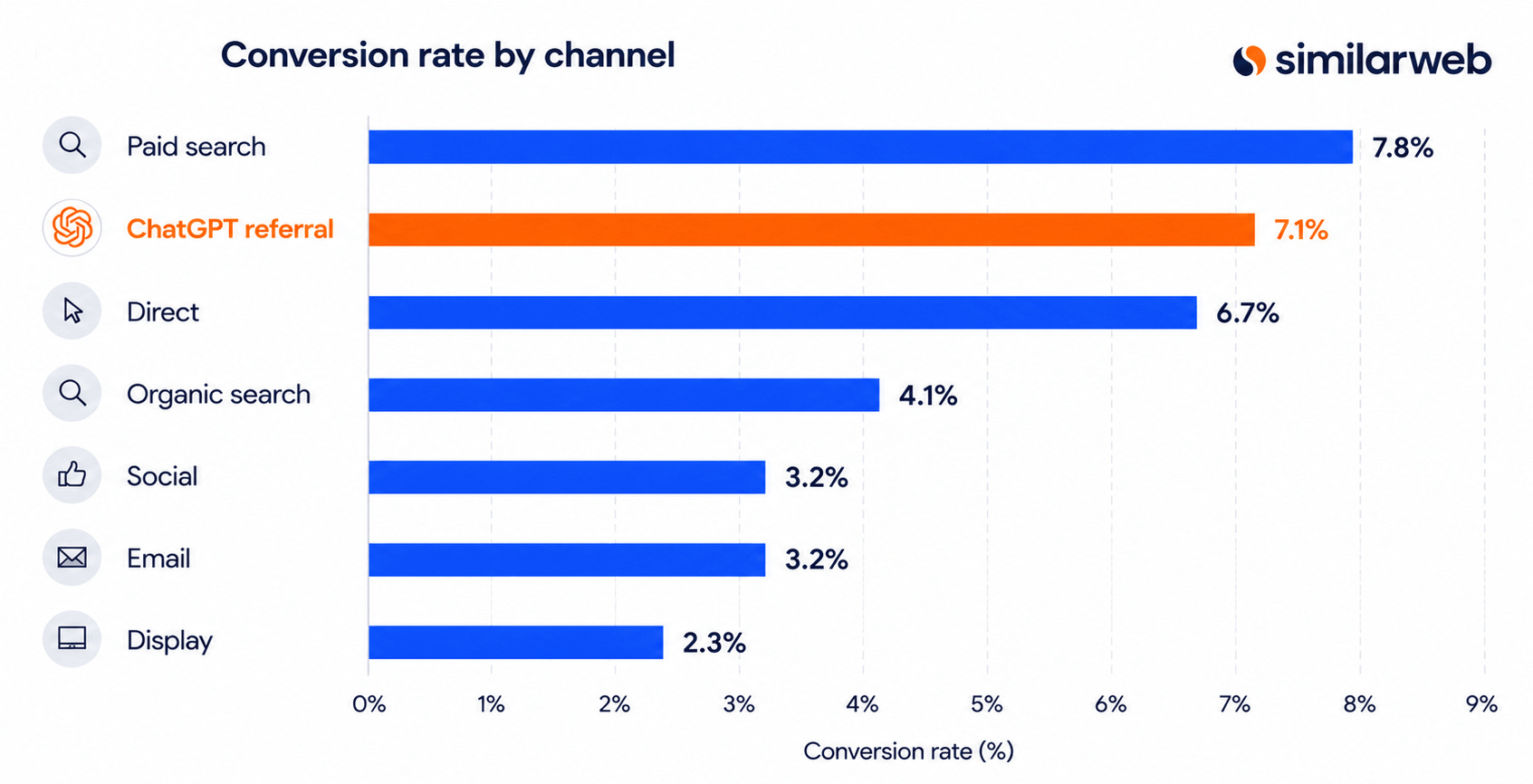
You’d be wrong to. Similarweb’s clickstream data shows ChatGPT referrals converting at 7.1%, second only to paid search, and ahead of organic, social, email, and display. B2B agencies report AI-sourced visitors spending dramatically longer on site and converting meaningfully better than average. These buyers arrive with intent, because the “consideration phase” happened inside a chat window.
With ChatGPT at roughly 900 million weekly active users, even a thin slice of that behaviour shifting toward commercial questions is a serious acquisition force.
What this means for your stack
Three practical takeaways:
1. Add the dropdown option… today. It costs nothing and it’s currently the cheapest AI-attribution tool that exists. Self-reported attribution was treated as soft data for years; it’s now one of the few honest windows into AI-driven discovery. (Pro tip from the attribution nerds: don’t put it first in the list, people lazily click the top option, and you’ll pollute your own signal.)
2. Treat self-reported attribution as a first-class data source again. Pipe it into your CRM. Compare close rates and deal velocity for AI-tagged leads against other channels. Marketers who do this are consistently finding their dashboards under-report AI’s influence.
3. Start writing to be recommended, not just ranked. SEO is dead and a new discipline is forming around this call it GEO, AEO, or AI visibility (the naming wars are ongoing). The core shift: SEO optimised for a results page; this optimises for being the answer a model reaches for. Clear positioning, comparison content, authoritative third-party mentions, and structured product information all matter more than ever.
The checkbox is the canary
We spent two decades building an attribution industry on the assumption that customer journeys leave digital footprints. LLMs broke that assumption and the market’s first response wasn’t a new analytics platform. It was a humble dropdown option borrowed from 1995.
The companies adding that checkbox are admitting their dashboards have a blind spot big enough to deserve its own line item and getting ahead of the channel it represents.
Is “AI tool” in your dropdown yet?
The checkbox framing names something most adoption stories avoid: once a tool becomes a box every team is told to tick, usage gets reported as progress whether or not anything downstream actually improved. That is how a capability turns into a ritual, where the metric becomes 'we used it' rather than 'it worked.' I dug into the same disconnect on the productivity side, where people are certain AI sped them up while the output data says otherwise: https://rkto.substack.com/p/you-think-ai-is-making-you-faster